
The best gate installation for a Newark, DE property depends on how people will use the entrance and how much room the gate has to move. Before choosing a design, compare swing and sliding layouts, access controls, safety features, permit requirements, and the cost of upkeep.
A gate should work for deliveries, visitors, and the people who use it every day. These considerations can help you plan an entrance that fits your property.
1. Decide What the Gate Needs to Do
Start with the gate’s purpose. A driveway entrance may need to accommodate deliveries, while a yard gate may help contain a pet. Open pickets offer visibility; a solid design blocks more of the view.
Think about who needs access and how often. That answer will shape the opening width, latch or access system, and whether you need a separate pedestrian entrance.
2. Measure the Opening and Approaches
Measure the clear opening needed for the widest vehicle or equipment you expect to use. Consider delivery trucks, a trailer, and the space needed to turn into the drive.
Look at where a visitor would stop while the gate opens. A gate set too close to the road can leave a vehicle waiting in an awkward or unsafe position. Check the slope and nearby sidewalks before settling on a location.
3. Compare Swing and Sliding Gate Installation
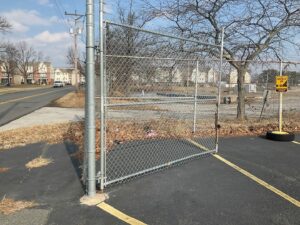
A swing gate needs a clear arc as its panels open. A rising driveway, parked vehicles, or landscaping can limit that space. A double swing gate divides the opening between two panels, which can reduce the sweep of each panel.
A sliding gate moves along the fence line instead, so it needs enough unobstructed room to one side. Neither style fits every lot: compare the gate’s full travel with the available space before choosing by appearance alone.
4. Check Property Lines, Permits, and Approvals
Confirm boundaries and easements before planning posts near the property edge. Review association rules, if applicable, for height, appearance, and approval.
Jurisdiction matters too. The City of Newark lists fences among projects requiring a building permit. Ask the appropriate office whether your particular gate, associated fence, or electrical work needs a permit. A Newark mailing address alone does not establish which office has authority, and changing a road entrance can raise separate questions.
5. Plan Posts and Underground Work
Posts must suit the gate they support. A wide or solid panel places different demands on hinges and supports than a small walk gate. Have an existing post assessed before assuming it can carry a new gate.
Before excavation for posts or electrical work, arrange a utility locate through Delmarva 811. Also identify private lines, such as irrigation or wiring to an outbuilding, which may need separate locating.
6. Choose a Material for Your Priorities
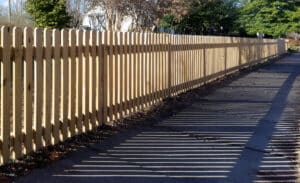
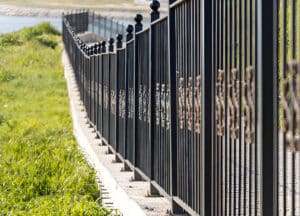
Wood can complement a traditional fence but needs periodic finish care. Aluminum offers a metal appearance with less concern about rust; steel offers strength but needs attention to damaged finishes. Vinyl can suit a matching fence.
Ask how the gate will be framed, finished, and maintained. A solid panel also presents more surface to the wind than an open design, so discuss how its size and exposure affect the support and operator.
7. Decide Between Manual and Automatic Operation
A manual gate can suit an entrance used occasionally. An operator makes frequent entry more convenient but adds equipment and power considerations.
The operator must suit the gate’s size, weight, and expected use. Discuss where power would come from, who will handle any necessary electrical work, and how the gate can be opened during an outage. Do not assume a battery backup is included.
8. Match Access Controls to Everyday Users
A remote may work for a household driver, while a keypad or telephone entry system can help manage visitors. Consider deliveries, guests, and how you will change access when someone no longer needs it.
Place controls where users can operate them safely and see the gate move. Emergency access requirements depend on the property and local authority, so confirm the appropriate arrangement before ordering equipment.
9. Treat Gate Safety as Part of the Design
An automatic gate can injure someone caught in its path. The U.S. Consumer Product Safety Commission identifies entrapment and pinch points as hazards and discusses sensing devices, guarded rollers, and control placement.
Ask the installer how the proposed gate and operator address entrapment risks and applicable current safety standards. Keep children away from moving gates and controls, and discuss a separate pedestrian route rather than relying on a vehicle gate for foot traffic.
10. Compare the Full Cost and Maintenance Plan
A useful estimate should identify the gate, posts, hardware, operator, safety devices, and access controls included. Ask whether site preparation, electrical work, permits, removal of an old gate, and ongoing service are included or quoted separately.
Plan for inspection and adjustment of moving parts. For an automatic system, ask how safety devices are checked, how to use the manual release, and which written warranty terms apply.
Plan Your Gate Installation
Planning a new gate in Newark, DE? Leading Edge Fence & Gates designs and installs custom gates and offers access control options for residential and commercial properties. Call (302) 892-2575 to discuss your entrance, material choices, and installation needs, and request a free estimate.